
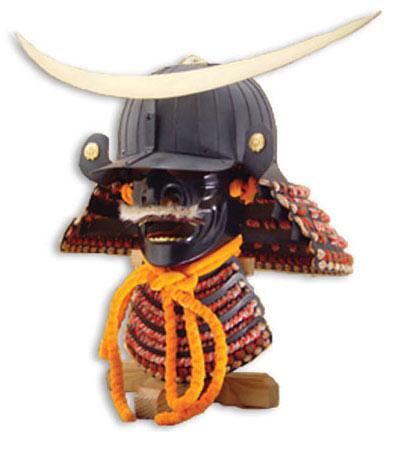
The Japan of Mikao Usui’s time was a vastly different place than it is today… in fact it was Dr. Usui’s generation that is largely responsible for transforming Japan from the feudal state it was into the democracy it has become. Yet, while a before and after snapshot would instantly reveal these vast differences, the uncapturable (by photograph anyway) heart remains largely the same. Aspects derived from such cultural influences as Shinto and Bushido remain are still interwoven into current Japanese culture. This would have been much more pronounced during Dr. Usui’s time which, while a time of great upheaval and change, was still a time when life was simpler and much easier to understand. I’d like to take a quick look at how the effects of Bushido, the way of the Samurai, would have had a tremendous influence on Dr. Usui’s life and can also be found deep within Reiki. In this case it would not require much of a stretch of the imagination at all to say that Bushido is in fact… the soul of Reiki.
Its interesting to note that in most of the available pictures of Dr. Usui he is wearing kimono (traditional Japanese attire) while Dr. Hayashi, in many of those pictures is wearing a western style suit. This is representative of Japan of the day, as dramatized in The Last Samurai, half the country was looking forward while the other half was still clinging to the traditional ways. Its easy to see from the photos which way Dr. Usui was leaning. The history of that time is truly amazing and there is currently an ongoing TV drama, called Atsumime which is running for one year chronicling the life and times of Princess Atsu, the wife of the 13th Shogun, who was caught right in the middle of these historic changes. Princess Atsu has captured the heart of Japan and every Sunday evening millions of households tune in and are transformed back to a time when things were simpler… yet all too complicated.
Its also important to remember that Dr. Usui was a martial artist and served as somewhat of a bodyguard in his earlier days, and the discipline required can only be compared to a military boot camp… instead of lasting 8 weeks though, one continued for a lifetime, constantly perfecting the skills they deemed necessary for peak performance in the future. This discipline is actually the core of Bushido, the cultivation of the mental and emotional (and often, but not always, physical discipline) necessary for peak performance of that disciple in the future. That discipline may be the art of swordplay (kendo), or may just as easily be the arts of flower arrangement (ikebana), tea ceremony (sado), calligraphy (shodo), incense burning (kodo) or any of a number of more spiritual pursuits.
Many people think of Bushido as strictly a military disciple, but this is simply not so. The fighting spirit can be applied to any aspect of one’s life and I believe the discipline involved in the seeking of perfection to be the basis of the fourth Reiki principle… work hard. The ability to continue studying, to fight those things that are preventing you from continuing to master your art, to persevere in the face of adversity, etc. are all contained within that principle. In all actuality, it may be the most important of the 5 Reiki Principles, in that, just as is true with the just for today part, work hard must be applied to the other principles and is not meant to be taken independently.
Let’s look at that a bit more closely. The first Reiki principle recommends that we “be thankful”. This can be taken on its own as a prime directive in how to respond in given situations or it can be taken much deeper. When we combine this principle with the first part of the Reiki Principles it becomes “Just for today, be thankful”. It is now transformed into much more than a response directive and becomes more of a way of life. Being thankful for each day, and all of the things that comprise it contains a very light, uplifting and inspiring energy which helps to raise us up out of the water, as opposed to its negative counterpart (whatever that personally happens to be), which is some type of heavy negative emotion, which in effect drags us down under the water where we are constantly required to struggle to reach the surface.
Now if we take that one step further and apply the fourth principle, we are admonished “Just for today, work very hard at being thankful”. This suggests that there is perhaps a great deal of discipline involved in being able to perfect this principle and that it may in fact take a lifetime to perfect this attitude of gratitude. Having the discipline necessary to live your life this way each day is the ultimate goal of Reiki. Having the passion for Reiki to dedicate the necessary effort to do so, the motivation to do this day after day and the determination to see it through is what Dr. Usui taught… hands-on healing is a rather aspect trivial aspect in the light of this.
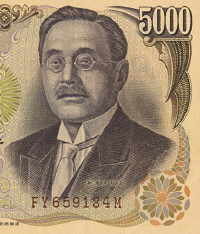
Returning directly to the concept of Bushido, I’d like to introduce you to a most interesting fellow named Inazo Nitobe (1862 – 1933) who is featured on the Japanese 5000 Yen bill. While there is very little known about the life and times of Mikao Usui, there is quite a bit known about Nitobe, as he himself was quite a prolific writer, and I believe there are many parallels to be drawn between the two. Dr. Usui was born in 1865 and Nitobe was born in 1862, so they are roughly of the same generation. Jujiro Nitobe (Inazo Nitobe’s father) was a retainer to the local feudal lord and Uzaemon Usui (Mikao Usui’s father) was reportedly a military commander which would have also placed their families at roughly the same level. Both men were caught up in a Japan that was desperately trying to catch up to the western world, shed the shackles of feudalism and enter the modern age in order to compete with the Western states that had recently forced their way into Japanese society. Both men studied abroad in order to gain first hand experience with western technologies and civilization in order to bring that knowledge back to Japan.
Nitobe’s own path was that of a statesman and politician, yet I am most fascinated by a book he published in 1900 called Bushido: The Soul of Japan
I could continue in this vein indefinitely, and perhaps at some point I will return to it as I feel it is of utmost importance in understanding Dr. Usui, and by extension Reiki, but I think you get the picture… if not, please do let me know. 
For further explanation or discussion, your thoughts are most welcome and highly encouraged, please feel free to comment below!!!






One response to “Bushido – The Soul of Reiki”
[…] Bushido – The Soul of Reiki […]