
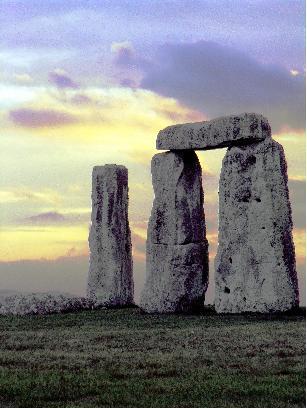
Most Reiki Practitioners that I know basically fall into one of three categories as to which facet of Reiki they find most appealing. I personally feel that limiting yourself to only one of these facets does not offer the diversity for which the Reiki path was designed, and find that a balanced approach to all three is much more rewarding in the long run. I’d like to take a quick look at these three facets, which I refer to as The Three Pillars of Reiki.
Reiki Healing
Reiki Healing mainly involves using Reiki for hands on physical healing (occasionally mental, emotional and sometimes even spiritual healings are conducted as well) these being performed either on oneself or on others. Most of the literature I’ve seen on Reiki involves one aspect or another of Reiki Healing and I would hazard to guess that most Reiki practitioners fall into this category. In fact, most of the Reiki practitioners I know who are in this category, know little of either of the other two categories (and actually show little interest in them as well). Focus here is placed on things like knowing which hand positions to use, which distance healing methods to use, recountings of Mrs. Takata’s stories, etc.
Until recently I would have referred to this category of Reiki as Traditional Western Reiki, but as of late more people here in Japan are using Reiki solely for the benefits derived from this facet as well. Perhaps we all begin with this aspect of Reiki and once enough time and effort has gone into ones practice we are ready for something more… which tends to lead to one of the other two categories.
Reiki Energetics
Reiki Energetics involves a study of the subtle Reiki energy itself. The ability to identify Reiki and non-Reiki energies, to be able to grow one’s Reiki channel and thereby strengthening those channels/energies, to manipulate the Reiki energies in one way or another, etc. are all characteristic of Reiki Energetics. Involvement in this facet of Reiki involves a special calling, as some people seem to be naturals, (and can involve themselves in the study of Reiki Energetics quite effortlessly) while others need a great deal of effort to be able to do so (and many of these give up in the process of trying).
My own opinion (although not exclusively my own) is that Reiki Level Two is actually the level of Reiki Energetics and that by the time one has reached this level they are ready to begin their experimentations in and study of these energies. Mastery of this level is quite a different ballgame than mastery of Reiki Healing and sometimes requires substantial effort from those who are not so called naturals. However, those that follow the Reiki path naturally, and only progress to this level when they feel they are ready for it seem to have no trouble in mastering it. Either way, it is Advanced Reiki indeed. Perhaps this difficulty in mastering this aspect is why, traditionally, most Reiki practitioners in Japan never go beyond Reiki Level Two (and this includes the majority of the members of the Usui Reiki Ryoho Gakkai as well).
Reiki Spirituality
Reiki Spirituality involves the spiritual and meditational aspects of Reiki as a path to Spiritual Enlightenment. There is a very strong Buddhist or Hindu aspect to this practice, as meditation is more a part of their religion than it generally is of Christianity. I don’t know enough about Islam to know if is part of their religion or not (if anyone does I’d love to hear about it) and the same goes for any of the other world religions (i.e., I don’t know enough about it to even guess).
Just as I feel that Reiki Level Two is actually the level of Reiki Energetics, I also feel that Reiki Level Three is the level of Reiki Spirituality. Once one has reached this level (for the very few that receive a calling to do so) one should be ready for the effort involved in finishing the path… which generally involves the intense daily meditations and advanced study needed to reach Spiritual Enlightenment.
Many styles of Reiki contain a fourth level, which is beyond these three levels and that is the teacher level. I do not consider it a separate aspect, it requires not only the mastery of the previous levels, but the ability to teach them effectively as well. To my knowledge there are very few true Reiki teachers out there and of course, before I ruffle anyone’s feathers I am referring to traditional Reiki, which does not necessarily include what is being done nowadays in the Age of Enlightenment which offers many other paths to Spiritual Enlightenment (so Reiki is not the only game in town). 😆
Of course you may find one of these Reiki aspects has more to offer you personally, and indeed, we may all bounce back and forth between them during our time as Reiki practitioners. It will probably be good to keep these in perspective though and keep the balanced approach and our personal goals in mind (whatever they may be).
For further explanation or discussion, your thoughts are most welcome and highly encouraged, please feel free to comment below!!!




One response to “The Three Pillars of Reiki”
Hi Duane
Good information. I know that the Sufi sect in Islam practice enlihgtenment.